


A federal judge permanently blocked key parts of President Donald Trump's executive order requiring proof of citizenship for federal voter registration.
Judge Blocks Trump Citizenship Voting Order
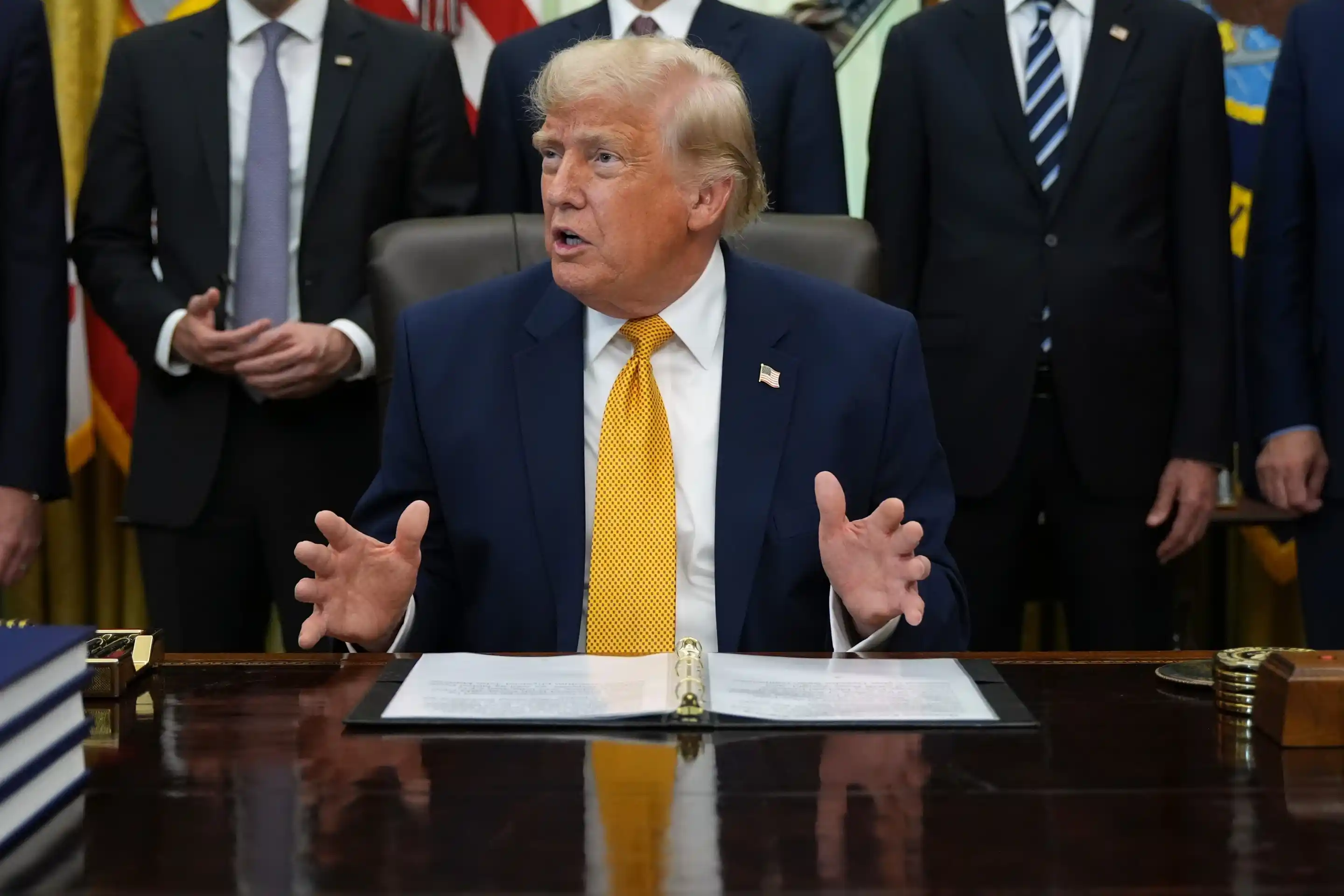
"A federal judge permanently blocked key parts of President Donald Trump's executive order requiring proof of citizenship..."
A federal judge has permanently blocked key provisions of President Donald Trump's executive order that would have required documentary proof of U.S. citizenship for voter registration in federal elections, ruling that the president overstepped the constitutional limits of executive power.
U.S. District Judge Denise Casper found that the White House cannot unilaterally rewrite federal election procedures through an executive order, concluding that authority over election rules rests with Congress and the states.
The decision turns an earlier preliminary injunction into a permanent one, preventing the administration from enforcing several of the order's central provisions while the broader legal dispute continues. In her ruling, Judge Casper said the executive branch does not have the authority to impose new voter registration requirements on its own.
Trump's executive order would have required people using the federal voter registration form to provide documentary proof of citizenship, such as a passport or birth certificate. It also included provisions affecting mail-in ballots and sought to tie certain federal election funding to whether states complied with the new requirements.
The White House defended the order as a measure designed to strengthen election integrity. Opponents argued it conflicted with the Constitution and existing federal election law.
Judge Says Election Rules Are Not Set by the White House
The court's decision focused on the Constitution's separation of powers rather than the broader political debate over election security.
Judge Casper wrote that while the Constitution grants the president executive authority, it does not give the office independent power to regulate federal elections.
Instead, the ruling emphasized that Congress sets the rules for federal elections, while states have primary responsibility for administering voter registration systems and holding elections. Within that framework, the court said, the executive order exceeded presidential authority.
The lawsuit was brought by a coalition of Democratic attorneys general, who said the administration was seeking to circumvent Congress and impose nationwide election rules through executive action.
State officials who challenged the order hailed the decision as a win for state authority and the constitutional process that governs election law. The ruling is one of the administration’s biggest legal defeats involving its election policy agenda during Trump’s second term.
Proof-of-Citizenship Requirement Remains a Divisive Issue
The requirement to provide documentary proof of citizenship remains at the center of the dispute.
Supporters of the executive order argued that requiring documents such as passports or birth certificates would strengthen confidence in elections by ensuring that only eligible U.S. citizens are able to register to vote. The administration maintained that additional verification measures were needed to prevent unlawful voting.
Opponents took a different view, arguing that documented cases of noncitizen voting remain rare. They also warned that requiring official documents could make voter registration more difficult for eligible citizens who do not have immediate access to records such as passports or birth certificates.
Voting rights organizations further argued that existing state and federal laws already prohibit noncitizens from voting in federal elections.
Judge Casper's ruling did not weigh in on those competing policy arguments. Instead, the decision turned on a narrower constitutional question: whether the president can impose such requirements without the approval of Congress.
The administration is unlikely to give up on its efforts to implement similar measures through legislation rather than executive order.
Legal Fight Over Election Policy Far From Over
The executive order is now permanently blocked, but the larger debate over election policy is far from over. Trump has continued to push for legislation that would create proof-of-citizenship requirements through Congress, where similar measures still are being considered.
The administration also has faced other legal challenges involving election-related initiatives, including efforts involving voter databases and increased federal oversight of state election systems. Those cases have similarly focused on whether the executive branch exceeded its constitutional authority or contradicted existing federal law.
Judge Casper’s ruling reinforces the long-standing constitutional framework under which Congress sets federal election standards while states administer the elections. Whether proof-of-citizenship requirements are ultimately adopted nationwide will likely turn on action by Congress rather than presidential executive orders, ensuring that election law remains at the center of legal and political debate ahead of future federal elections.
By Antonia Allison — Immigration
US news journalist, American news reporter, US politics news writer, breaking US news, US policy analysis, federal government news, US economy news, international US coverage