


An Air Canada Express flight from Newark to Halifax diverted to Boston after the captain suffered a medical emergency, with the first officer safely landing the aircraft.
Air Canada Flight Diverts to Boston After Pilot Emergency
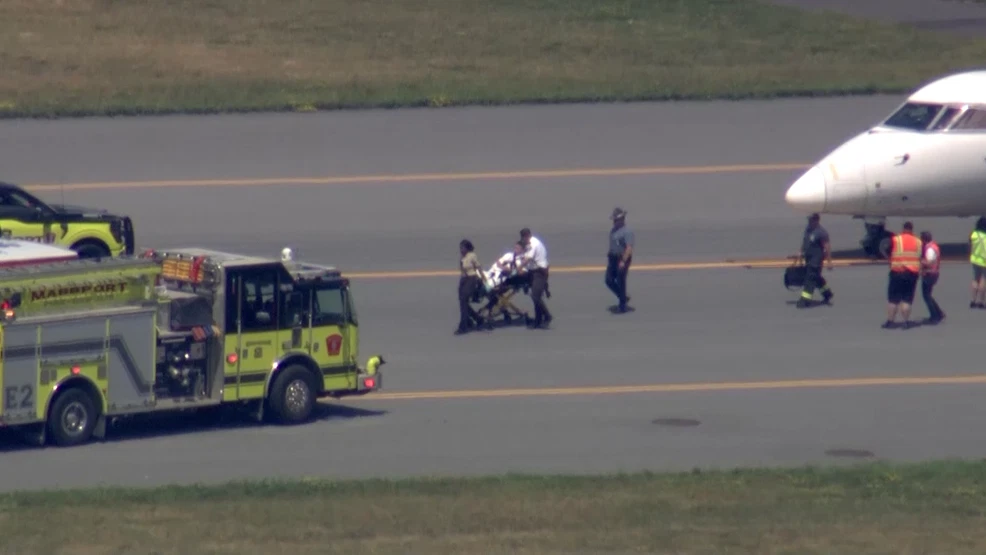
"An Air Canada Express flight from Newark to Halifax diverted to Boston after the captain suffered a medical emergency, w..."
An Air Canada Express flight traveling from Newark Liberty International Airport to Halifax Stanfield International Airport was diverted to Boston Logan International Airport after the captain suffered a medical emergency while the aircraft was in flight. PAL Airlines flight AC7664, a De Havilland Dash 8-400, departed Newark with 61 passengers. About an hour into the flight, the captain had a serious medical emergency and was removed from the cockpit, following standard airline safety procedures. The first officer immediately took control of the aircraft and diverted the flight to Boston. The aircraft landed safely at approximately 2 p.m. local time, where emergency responders were already in position. Massachusetts State Police, Massport Fire Rescue and Boston Emergency Medical Services met the aircraft upon arrival, and the captain was transported to Massachusetts General Hospital for treatment. Officials have not disclosed the nature of the medical emergency, and no update on the captain's condition has been released.
First Officer Safely Brings Aircraft to Boston
Air Canada said the incident demonstrated how commercial aviation safety procedures are designed to handle unexpected situations in the cockpit. In a statement, the airline confirmed that after the captain became ill and was removed from the flight deck, the first officer safely operated the aircraft and completed the diversion without assistance. The airline noted that both pilots are fully qualified to fly the aircraft independently, ensuring flights can continue safely if one pilot becomes unable to perform their duties. Aviation experts said cases involving pilot incapacitation are uncommon, but they are scenarios that flight crews regularly prepare for through simulator training. Standard operating procedures are specifically designed so that a single qualified pilot can safely manage the aircraft until landing if necessary. The aircraft touched down without incident, allowing emergency personnel to board immediately and attend to the captain before passengers exited the plane.
Passengers Resume Their Journey
Once the aircraft had been inspected and required operational procedures were completed, Air Canada arranged for the flight to continue to its original destination. The aircraft departed Boston later the same day and arrived safely in Halifax, Nova Scotia. The airline also said it was working to support passengers affected by the unexpected diversion. According to Massachusetts State Police, authorities were notified shortly before the aircraft's arrival that a crew member was experiencing a medical emergency. That advance notice allowed emergency services to prepare for the landing and respond as soon as the aircraft reached the gate. No passengers or other crew members were injured during the incident.
Safety Procedures Worked as Intended
The diversion has drawn attention to the aviation industry's long-established procedures for handling in-flight medical emergencies involving flight crews. Commercial airliners operate with two fully qualified pilots so that one can immediately assume full responsibility if the other becomes incapacitated. Aviation experts say such incidents are rare, but airlines train extensively for them, making pilot incapacitation a standard part of recurrent simulator exercises. The successful landing in Boston underscored the importance of cockpit procedures, coordination with air traffic controllers and rapid response by emergency personnel in the face of unexpected circumstances. Although officials have not released details about the pilot’s health, the flight landed safely for passengers and was ultimately able to complete its journey despite a brief delay, a testament to the resilience of modern aviation safety protocols in times of trouble.
By Gale Hardy — Transportation
transportation journalist, logistics reporter, public transport news writer, mobility expert, freight news analyst, transport industry journalist India, infrastructure news reporter