Autonomous Robotics Achieve Milestone in Self-Assembling Deep-Space Habitats in Microgravity Orbital Trials
NASA and commercial aerospace consortia completed orbital flight demonstrations proving that multi-jointed robotic systems can autonomously weld, inspect, and deploy mega-structures in low-Earth orbit.

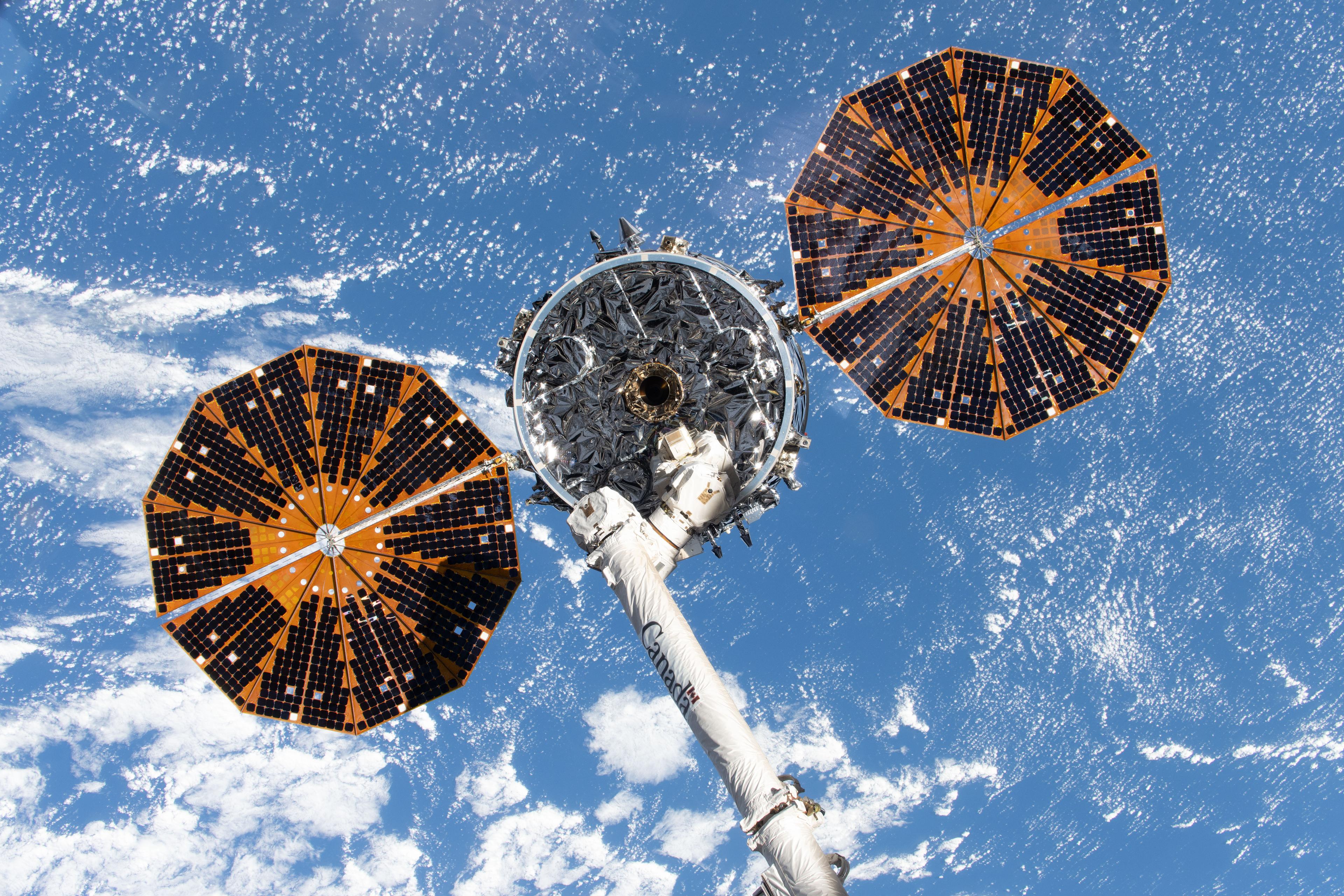
HOUSTON & CAPE CANAVERAL — In a historic step forward for human space exploration infrastructure, aerospace engineers at NASA and commercial orbital partners confirmed Tuesday the flawless completion of an autonomous robotic in-space assembly trial conducted aboard an uncrewed microgravity platform in low-Earth orbit.
The mission demonstrated for the first time that paired, highly dexterous autonomous robotic manipulators equipped with computer vision and real-time lidar scanning can independently extract structural composite trusses, align high-tolerance interlocking joints, and execute electron-beam vacuum welds without real-time human piloting from ground control stations.
During the ninety-six-hour orbital test sequence, the robotic systems assembled a thirty-meter-long structural backbone designed to support deep-space solar arrays and pressurized habitat modules. Flight telemetries confirmed that structural rigidity and weld integrity met all aerospace flight-rating standards, outperforming ground simulation predictions.
Mission directors emphasized that in-space manufacturing and autonomous assembly represent the only economically feasible pathway to construct next-generation lunar orbit waystations, Mars transfer vehicles, and kilometer-scale orbital observatories that are physically too massive to launch aboard conventional rocket fairings.
By eliminating the need for astronauts to undertake dangerous, fatigue-inducing spacewalks to perform routine mechanical construction, autonomous robotic construction significantly mitigates mission risk while accelerating deployment schedules for deep-space science outposts.
Following the successful test return data, space agency planners confirmed that the autonomous assembly technology will be integrated into upcoming Artemis lunar orbital architectures scheduled for flight validation over the next two launch cycles.
The autonomous robotics framework integrates advanced real-time fault detection algorithms capable of identifying micro-fissures, thermal expansion variations, and mechanical stress points across composite materials during the assembly sequence. By running continuous stress-strain diagnostics concurrently with optical scans, the robotic arms make sub-millimeter positional adjustments to ensure structural joints remain perfectly aligned despite the intense thermal swings encountered as spacecraft transit between orbital sunlight and eclipse.
Commercial space infrastructure partners underscored that the breakthrough significantly lowers launch mass overhead, since materials can be compacted into dense payload canisters and autonomously deployed without requiring complex single-piece mechanical hinges. Aerospace analysts anticipate that early commercial iterations of these autonomous orbital assembly platforms will begin commercial operations by late 2027, unlocking new capabilities for in-space satellite servicing, debris remediation, and deep-space communications arrays.
Related Coverage

Geological Breakthrough: Deep-Mantle Pacific Subduction Revealed as Engine Driving North America's Grand Canyon Uplift
Groundbreaking seismic tomography and mineralogical isotopic analysis demonstrate how ancient oceanic plate tectonic forces thousands of miles away triggered the iconic geological carving of the American Southwest.

Breakthrough Electronic Implant Eliminates Type 2 Diabetes Symptoms Without Insulin in Trial
A tiny bioelectronic device using electro-catalysis converts excess circulating glucose into naturally eliminated compounds, achieving superior glycemic control and weight reduction.

Illumina Selected for Historic National Genome Sequencing Initiative to Pioneer Predictive Healthcare
The ambitious program will sequence nearly 1 in 10 citizens, generating one of the most comprehensive multi-ethnic genetic datasets to preempt chronic disease.