NASA's Europa Clipper Completes Initial Deep-Space Instrument Checkouts as 1.8-Billion-Mile Jovian Odyssey Progresses
Mission controllers at NASA's Jet Propulsion Laboratory confirm that Europa Clipper has successfully deployed its 28-foot magnetometer boom and begun primary instrument calibration en route to Jupiter's ocean world.

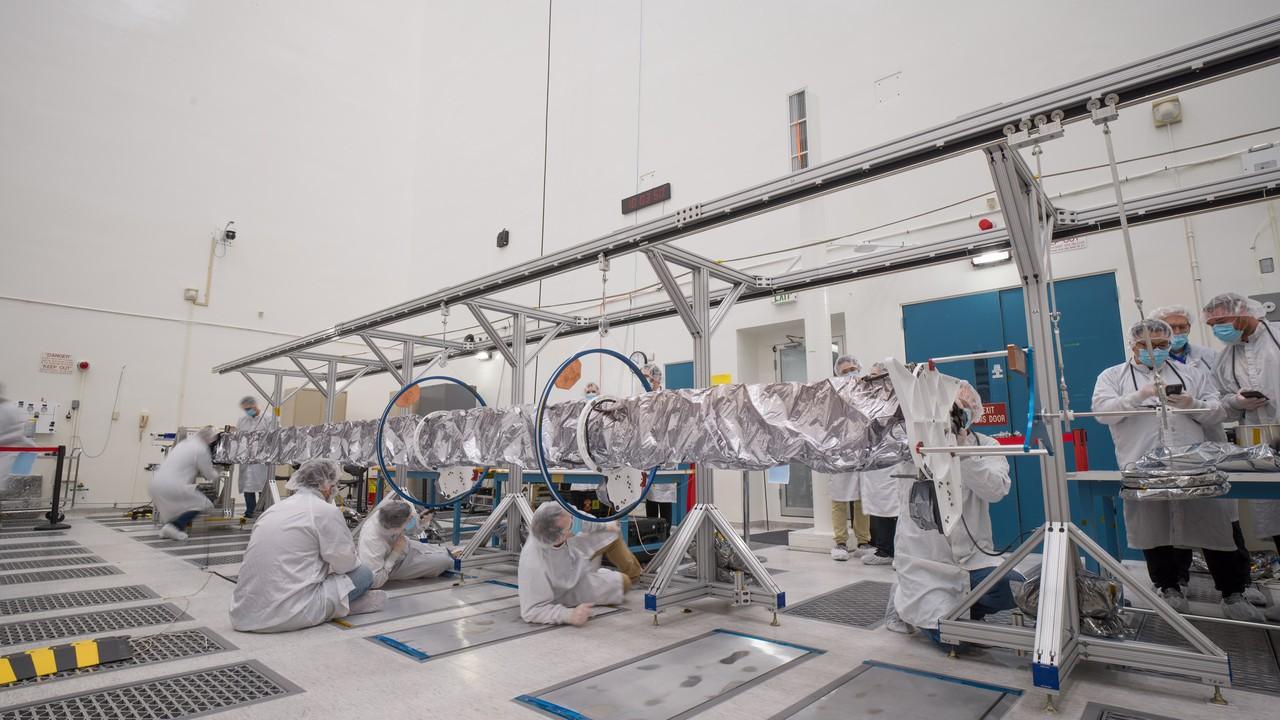
PASADENA, Calif. — Cruising millions of miles from Earth on its historic journey toward the outer solar system, NASA's Europa Clipper spacecraft has successfully completed its critical initial instrument health checks and deployment milestones, confirming that the flagship planetary probe is functioning with exceptional precision on its 1.8-billion-mile trajectory toward Jupiter.
Mission operators at NASA's Jet Propulsion Laboratory (JPL) confirmed that flight software commands successfully unfurled the spacecraft's 28-foot magnetometer boom, a delicate sensor-laden mast engineered to measure the subtle magnetic field variations generated by the interaction between Jupiter's powerful magnetosphere and Europa's subsurface saltwater ocean. Engineers verified that the boom locked into its rigid flight configuration, allowing the mission's magnetometer instruments to begin collecting ambient interplanetary field data.
Europa Clipper represents the largest planetary exploration spacecraft ever constructed by the United States space agency, spanning more than 100 feet from tip to tip with its massive solar array wings fully extended. Launched in mid-October aboard a SpaceX Falcon Heavy rocket from Kennedy Space Center, the spacecraft is tasked with determining whether conditions beneath Europa's cracked ice shell could support extraterrestrial microbial life. Scientists believe the moon harbors a global subsurface liquid ocean containing more than twice the volume of all of Earth's oceans combined.
In addition to the magnetometer deployment, JPL engineers reported successful functional testing of the probe's Europa Thermal Emission Imaging System (E-THEMIS) and wide-angle imaging cameras. The science team verified that high-gain communication antennas are maintaining high-data-rate telemetry links with NASA's Deep Space Network stations in California, Spain, and Australia, ensuring reliable communications across interplanetary space.
Europa Clipper is presently tracking along an optimal trajectory that will execute a critical Mars gravity assist maneuver in early 2025, using the Red Planet's gravitational pull to slingshot the probe back toward an Earth flyby before propelling it into the outer solar system. The spacecraft is scheduled to enter orbit around Jupiter in April 2030, where it will perform 49 low-altitude flybys of Europa to map its ice crust thickness, analyze vapor plumes, and scout potential landing zones for future robotic missions.
Related Coverage
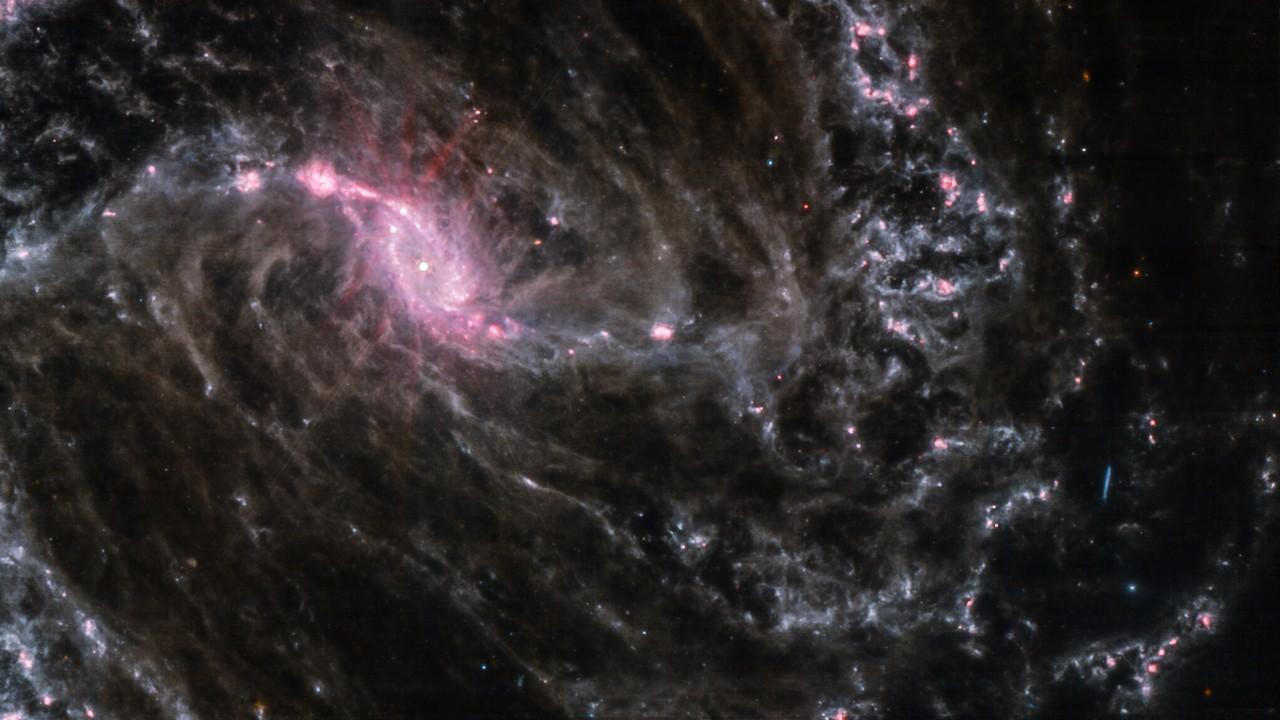
NASA's James Webb Space Telescope Uncovers New Inner Moon of Uranus and Captures High-Definition Infrared View of NGC 1365
Astrophysicists utilizing JWST's ultra-sensitive infrared cameras detect a previously hidden 29th moon orbiting Uranus and reveal unprecedented details of star-forming filaments feeding a supermassive black hole in galaxy NGC 1365.

Russia Launches Experimental 'Oreshnik' Hypersonic Ballistic Missile at Mach 10 in Dnipro Strike, Prompting Emergency NATO Consultations
Russian forces conducted a combat test of an experimental intermediate-range ballistic missile dubbed 'Oreshnik', striking the Pivdenmash aerospace facility in Dnipro with Mach 10 multiple warheads in response to Western deep-strike permissions.

Catastrophic Bomb Cyclone and Atmospheric River Batter Pacific Northwest with 80 MPH Winds, Leaving 600,000 Without Power
A once-in-a-decade extratropical bomb cyclone coupled with a category 5 atmospheric river battered Washington, Oregon, and Northern California with hurricane-force gusts, toppling massive timber, leaving two dead, and cutting electrical power across metropolitan corridors.