Pentagon Deploys Third Carrier Strike Group to Gulf as Saudi Arabia, Qatar Issue Joint Condemnation of Iranian Radar Strike
Defense Secretary Pete Hegseth ordered the USS Theodore Roosevelt Carrier Strike Group into the Persian Gulf on Monday, reinforcing American deterrence as the Gulf Cooperation Council issued a rare unanimous declaration condemning the Iranian drone attack against U.S. naval radar facilities in Bahrain.

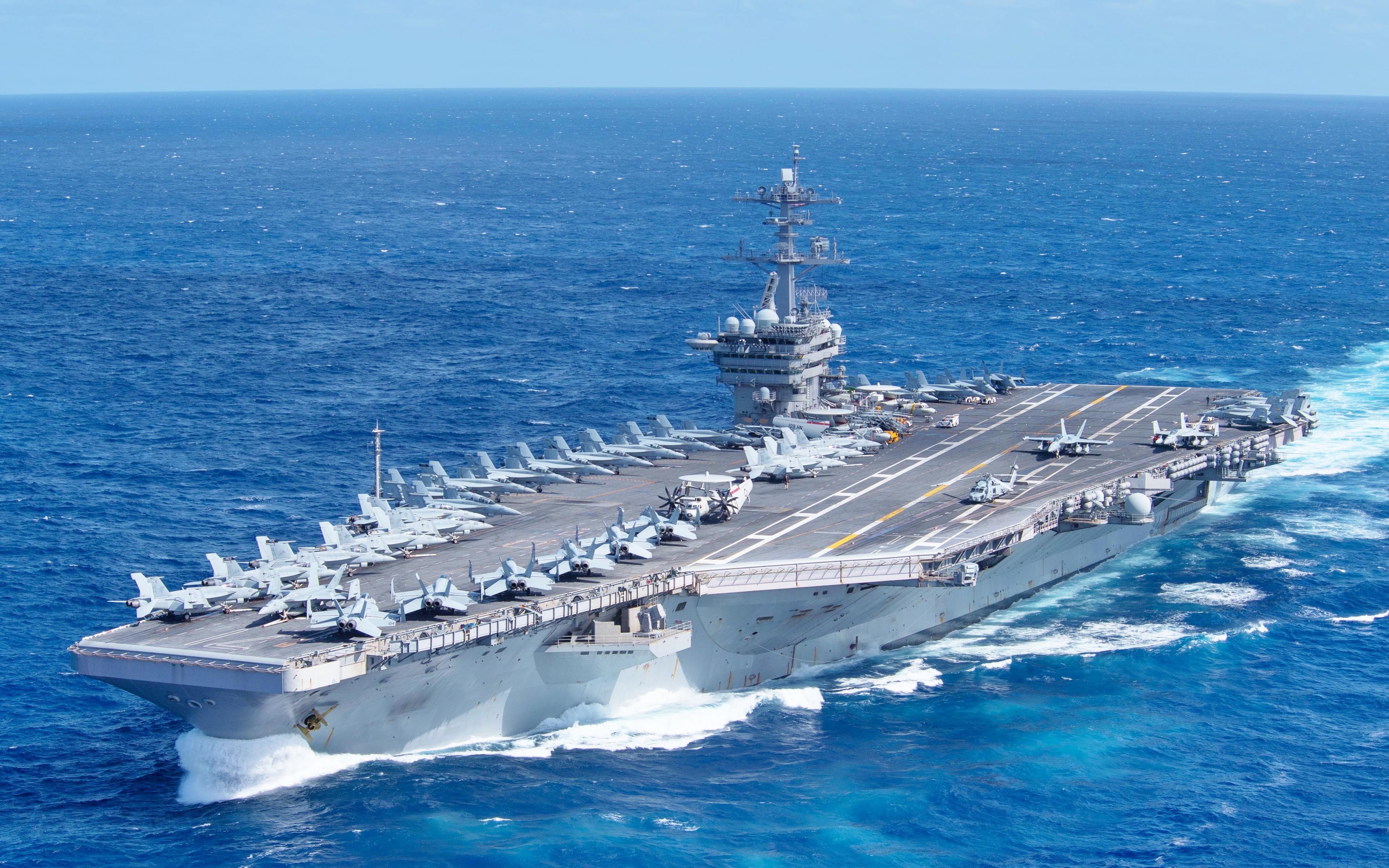
MANAMA, Bahrain — Escalating military readiness across the Middle East reached a pivotal threshold on Monday morning as the Pentagon confirmed that the nuclear-powered aircraft carrier USS Theodore Roosevelt (CVN-71) and its accompanying guided-missile destroyers have entered the operational theater of U.S. Central Command. The deployment brings three American carrier strike groups into the region simultaneously, establishing the largest concentrated naval posture in the Persian Gulf and Arabian Sea since early 2003.
The naval surge follows an emergency order signed Sunday evening by Defense Secretary Pete Hegseth in response to a pre-dawn Iranian one-way attack drone strike that severely damaged an advanced U.S. Navy AN/TPS-59 radar station on the southern perimeter of Naval Support Activity Bahrain. While automated point-defense interceptors neutralized three incoming Shahed-series munitions, an explosive payload struck a key sensor array, wounding two American service members and disrupting regional maritime surveillance feeds.
In a decisive diplomatic realignment, the Gulf Cooperation Council (GCC)—convening an extraordinary foreign ministerial summit in Riyadh chaired jointly by Saudi Arabia and Qatar—released a stern unanimous communique condemning the strike on Bahraini sovereign soil as a blatant violation of international law and a grave provocation against regional stability. The joint statement represented the most cohesive and unequivocal Gulf censure of Iranian military aggression since the normalization accords of recent years, underscoring growing alarm among Arab monarchies over Tehran's willingness to target shared airspace infrastructure.
'The security of the Gulf is indivisible, and any unlawful military attack upon the installations or territory of the Kingdom of Bahrain constitutes a direct threat to the peace and economic sovereignty of every member state,' the GCC ministerial council affirmed. 'We call upon the international community to enforce stringent maritime security frameworks and demand an immediate cessation of hostile drone proliferation across regional waterways.'
In Washington, national security officials confirmed that American, British, and regional defense forces have implemented heightened air-defense intercept patrols spanning the Strait of Hormuz. Pentagon spokespersons emphasized that while the carrier deployment is designed to prevent further vertical escalation, American armed forces maintain total operational latitude to execute proportional counter-strikes against launch nodes and weapon manufacturing depots if regional aggression persists.
Related Coverage
Middle East Tensions Surge as IRGC Claims Strike on U.S. Radar in Bahrain; Trump Recalls Vance From Negotiations
Regional security reached a knife-edge after Iranian forces claimed to target a U.S. early-warning radar site in Bahrain, prompting President Trump to scale back direct strikes while redirecting Vice President JD Vance away from diplomatic talks.

European Leaders Convene Emergency Dublin Summit Demanding Central Role in Ukraine Peace Negotiations
Meeting at Dublin Castle, European Union heads of state pushed back against bilateral U.S.-Russian diplomacy, insisting that European security architectures cannot be negotiated without direct, sovereign European representation.

U.S.-Led Trilateral Talks in Abu Dhabi Yield Ukraine Prisoner Exchange Deal as Envoys Depart for Moscow
Intense American-mediated discussions in the United Arab Emirates produced an agreement in principle on a major humanitarian prisoner swap between Russia and Ukraine, though a comprehensive ceasefire remains elusive as U.S. envoys travel to Moscow.