East Asia Summit Convenes in Manila as Indo-Pacific Leaders Demand Legally Binding South China Sea Code of Conduct
Leaders representing 18 Indo-Pacific nations convened in Manila for the 21st East Asia Summit on Tuesday, where Philippine President Ferdinand Marcos Jr. and Quad partners pushed for an enforceable, UNCLOS-backed maritime code of conduct amidst escalating naval tensions in disputed waters.

MANILA, Philippines — Heads of state and senior diplomatic envoys from across the Asia-Pacific region assembled at the Philippine International Convention Center on Tuesday morning for the opening plenary of the 21st East Asia Summit. Presided over by Philippine President Ferdinand Marcos Jr. under the theme of 'Navigating Regional Resilience and Maritime Integrity,' the high-stakes summit focused overwhelmingly on the volatile standoff in the South China Sea, where repeated maritime confrontations between coast guard vessels have raised alarms over international freedom of navigation.
In his address to the plenary, President Marcos delivered an impassioned plea to regional powers, insisting that peaceful dispute resolution cannot depend on informal understandings or unenforceable political declarations. Marcos urged member states and dialogue partners—including the United States, China, Japan, Australia, and India—to finalize a legally binding Code of Conduct (COC) that strictly adheres to the 1982 United Nations Convention on the Law of the Sea (UNCLOS) and respects sovereign exclusive economic zones.
'Peace and commercial prosperity in the Indo-Pacific cannot survive in an environment where international maritime law is treated as optional,' Marcos stated before the assembled leaders. 'A Code of Conduct that lacks binding legal enforcement and independent dispute mechanisms is merely a hollow posture. The Philippines calls upon all signatory states to respect the rule of law, safeguard unimpeded commercial navigation, and preserve the marine biodiversity that sustains hundreds of millions of people across our shared seas.'
On the diplomatic sidelines of the summit, leaders from the Quad nations convened an unannounced coordination meeting to harmonize maritime surveillance assistance programs across Southeast Asia. Indian Prime Minister Narendra Modi, highlighting 2026 as the India-ASEAN Year of Maritime Cooperation, reaffirmed New Delhi's commitment to expanding real-time satellite domain awareness feeds for littoral ASEAN states, while U.S. and Australian defense representatives pledged expanded joint naval patrols and search-and-rescue interoperability drills.
Chinese diplomatic delegates in Manila maintained that Beijing remains committed to diplomatic consultations under the existing Declaration on the Conduct of Parties, but warned external naval powers against 'militarizing regional waters' or forming exclusive geopolitical containment blocs. Despite lingering disagreements over arbitration mechanisms and geographic boundaries, ASEAN foreign ministers expressed cautious optimism that technical drafting committees will advance substantive articles of the Code of Conduct into early 2027.
Related Coverage

Xi Jinping and Putin Meet in Shenzhen Ahead of Historic Trilateral Summit with Trump on Nuclear Arms and Ukraine
Chinese President Xi Jinping and Russian President Vladimir Putin held strategic bilateral talks in Shenzhen on Wednesday, finalizing a unified diplomatic posture ahead of Thursday's unprecedented trilateral summit with U.S. President Donald Trump on nuclear non-proliferation and global stability.
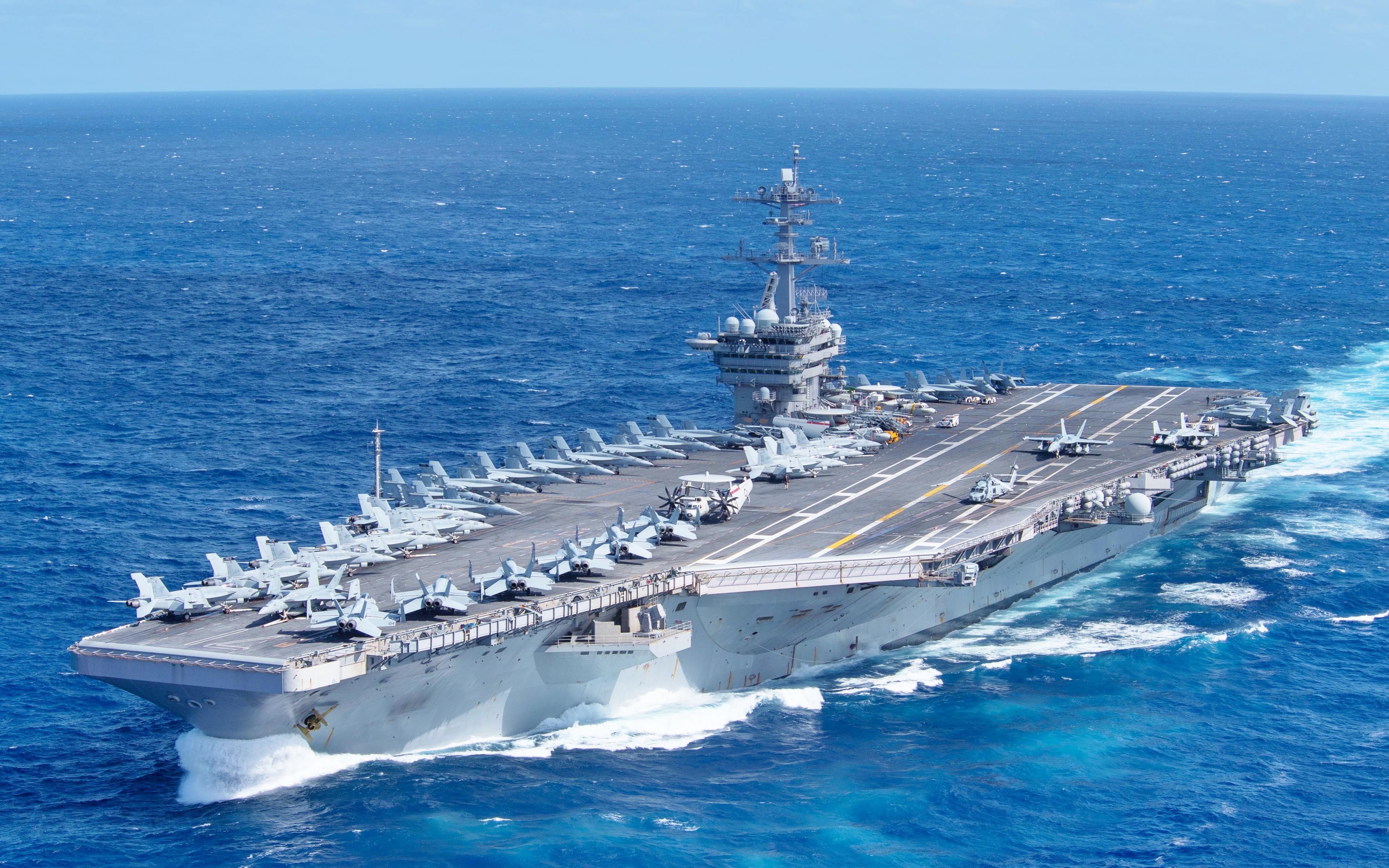
Pentagon Deploys Third Carrier Strike Group to Gulf as Saudi Arabia, Qatar Issue Joint Condemnation of Iranian Radar Strike
Defense Secretary Pete Hegseth ordered the USS Theodore Roosevelt Carrier Strike Group into the Persian Gulf on Monday, reinforcing American deterrence as the Gulf Cooperation Council issued a rare unanimous declaration condemning the Iranian drone attack against U.S. naval radar facilities in Bahrain.
Middle East Tensions Surge as IRGC Claims Strike on U.S. Radar in Bahrain; Trump Recalls Vance From Negotiations
Regional security reached a knife-edge after Iranian forces claimed to target a U.S. early-warning radar site in Bahrain, prompting President Trump to scale back direct strikes while redirecting Vice President JD Vance away from diplomatic talks.